Qatar Hub
01
Read Next
What Qatar National Vision 2030 and the digital agenda mean for commerce, retail, logistics and private enterprise operators in Doha. Clear operational implications.
Align commercial strategy directly with national diversification mandates: expanding non-oil GDP, digital services, and private sector job creation.
Capitalize on world-class logistics and free zone infrastructure designed to position Qatar as an advanced trade and transit hub for the wider region.
Implement sustainable packaging, renewable energy efficiency, and paperless digital governance in lockstep with the Environmental and Human Development pillars of QNV 2030.
Qatar National Vision 2030 (QNV 2030) and the Third National Development Strategy (NDS3) provide the overarching blueprint for transforming Qatar into an advanced, knowledge-based society capable of sustaining its own development.
The operational question for business leaders and investors is: How do commercial enterprises, digital marketplaces, and retail networks align their business models with state diversification priorities while capturing lucrative national supply chain opportunities?
Companies that proactively adapt to digital governance standards, green logistics mandates, and local talent development gain significant institutional tailwinds over competitors relying on outdated legacy models.
Operating under QNV 2030 requires targeting high-growth non-hydrocarbon sectors and embedding localized value addition into core commercial balance sheets.
| Cost Component | Operational Target | Risk Threshold |
|---|---|---|
| Non-Hydrocarbon GDP Growth Target | > 4.0% Compound Annual | < 2.0% signals private sector lag |
| National In-Country Value (ICV) Share | > 40% Local Supply Sourcing | < 20% limits government procurement eligibility |
| Digital Payments & Fintech Penetration | > 90% National Cashless Ratio | < 70% stalls digital efficiency goals |
| Sustainable Packaging & Fleet Electrification | > 50% Recycled / EV Share | Regulatory penalties on single-use plastics |
| Private Sector Knowledge Talent Ratio | > 30% Specialized Roles | Skills mismatch impedes automation scaling |
Source: Operator model — harisaslam.qa — Targets are operating benchmarks, not guaranteed results.
Translating national vision targets into commercial success requires synchronizing operational workflows with government platforms and sustainability initiatives.
Government Integration via Hukoomi & MOCI: Adopting seamless digital corporate licensing, automated tax compliance (Dhareeba), and instant customs clearance (Al-Nadeeb).
Free Zone Manufacturing & Assembly: Leveraging Qatar Free Zones Authority (QFZA) facilities at Ras Bufontas and Umm Alhoul for zero-duty regional re-export manufacturing.
Green Logistics Initiatives: Transitioning delivery vehicle fleets to hybrid/EV models and adopting biodegradable packaging aligned with national environmental benchmarks.
Organizations must audit their operational capabilities against QNV 2030 transition gates on an annual basis.
Verify full compliance with national data privacy regulations and sovereign cybersecurity baselines.
Assess corporate supply chains to ensure in-country value creation meets upcoming public procurement criteria.
Qatar National Vision 2030 is actively driven by state institutions including the Planning and Statistics Authority, Ministry of Commerce and Industry (MOCI), and MCIT. Alongside mega-infrastructure investments like Hamad Port, Doha Metro, and Msheireb Smart City, QNV 2030 establishes a globally competitive, forward-looking business environment for long-term capital deployment.
HA
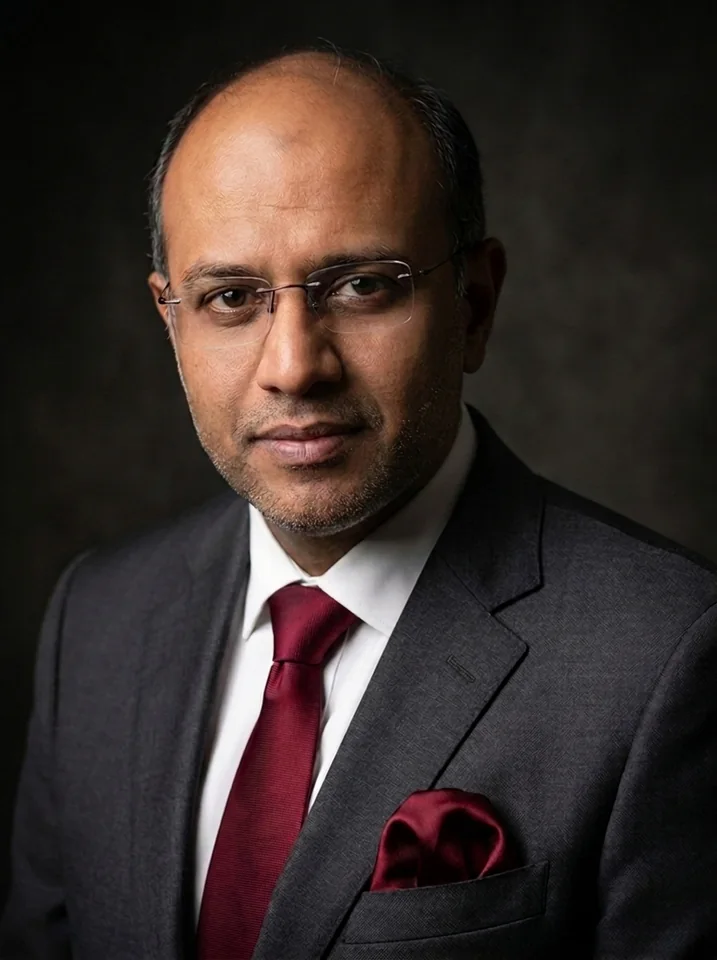
17+ years building, launching, and operating digital commerce, marketplaces, and retail turnarounds across Qatar, Oman, and the GCC. Focused on unit economics, daily execution, and cash-generating growth.