Qatar Hub
01
Read Next
The investment climate for commerce and retail in Qatar: where capital flows, valuation dynamics, joint ventures and what it takes to make commercial investments generate durable returns.
Qatar's Foreign Direct Investment Law (Law No. 1 of 2019) enables up to 100% foreign foreign ownership across most commercial and retail sectors.
Sovereign backing and investment incentives administered through Invest Qatar (IPA Qatar) and QFC offer attractive tax and legal frameworks for regional headquarters.
Underwrite investments based on sustainable cash flow and local operational execution rather than broad speculative macroeconomic growth multiples.
Qatar possesses one of the world's most formidable sovereign investment capacities through the Qatar Investment Authority (QIA), alongside highly liquid local family conglomerates and institutional funds. However, international investors frequently encounter challenges in structuring commercially viable private deals.
The core question for institutional and private equity investors is: How can capital be deployed into retail chains, digital commerce platforms, and logistics infrastructure in Qatar with clear downside protection and predictable cash yield?
Navigating local partnership dynamics, commercial registration rules, and realistic domestic market scale is essential to achieving expected risk-adjusted returns.
Evaluating commercial opportunities in Doha requires rigorous cash flow stress-testing, factoring in corporate tax exemptions and realistic cost of capital.
| Cost Component | Operational Target | Risk Threshold |
|---|---|---|
| Target Private Equity IRR | > 18% Net of Local Tax | < 12% insufficient for emerging market risk |
| EBITDA Valuation Multiples (Retail) | 5.5x–7.5x Normalized Cash | > 10x overvalues domestic growth ceiling |
| Working Capital Coverage Ratio | > 1.6x Current Liabilities | < 1.1x vulnerable to inventory liquidity traps |
| Foreign Direct Investment Equity Share | Up to 100% Legal Ownership | Unstructured sponsorship exposes capital |
| Target Cash-on-Cash Payback | < 4.5 Years on Store CapEx | > 7 Years risks lease renegotiation friction |
Source: Operator model — harisaslam.qa — Targets are operating benchmarks, not guaranteed results.
Structuring institutional investments in Qatar requires selecting the optimal legal jurisdiction and taking advantage of state investment incentives.
Entity Selection (QFC vs. MOCI vs. QFZA): Structuring under Qatar Financial Centre (QFC) for English common law legal certainty, 100% ownership, and full capital repatriation.
IPA Qatar Incentive Onboarding: Leveraging Investment Promotion Agency Qatar (Invest Qatar) fast-track licensing, tax holidays, and subsidized utility connections.
Robust Corporate Governance & Board Oversight: Implementing international reporting standards, independent audit committees, and clear operational milestones for executive management.
Prior to releasing tranches of growth capital or completing acquisitions, investors must validate three critical operational gates.
Perform forensic auditing on inventory aging, supplier payment terms, and historical return-on-invested-capital (ROIC).
Verify that operating margins hold firm across a complete 12-month trailing cycle without relying on shareholder loans or short-term credit lines.
Investment in Qatar is facilitated by Invest Qatar (IPA Qatar), the Qatar Financial Centre (QFC), and the Qatar Stock Exchange (QSE). Under the guidance of Qatar Central Bank (QCB) and the Ministry of Commerce, foreign investors enjoy stable currency convertibility under the US Dollar peg, world-class dispute resolution through the QICDRC, and direct connectivity to sovereign capital networks.
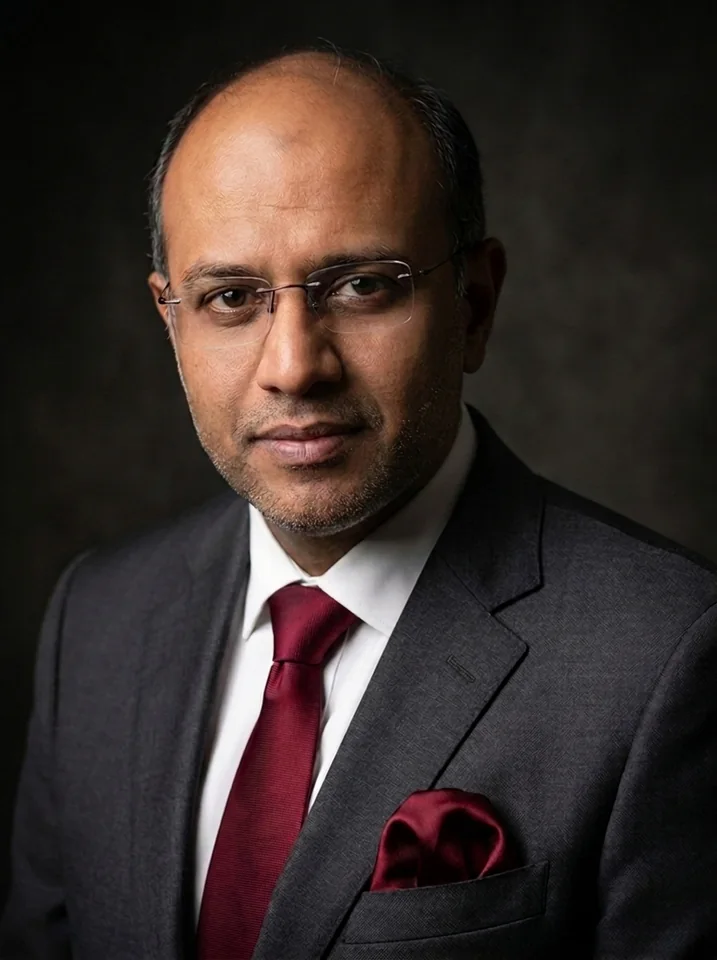
HA
17+ years building, launching, and operating digital commerce, marketplaces, and retail turnarounds across Qatar, Oman, and the GCC. Focused on unit economics, daily execution, and cash-generating growth.