Qatar Hub
01
Read Next
Qatar's startup and venture ecosystem from an operator's view: funding vehicles, capital efficiency, scaling beyond domestic market boundaries, and achieving sustainable cash generation.
Build for GCC-wide scalability from day one; the domestic Qatar market is ideal for proof-of-concept validation, but regional expansion drives venture returns.
Leverage non-dilutive research and development grants (QDB, QRDI) before seeking external institutional equity.
Maintain disciplined burn multiples; venture survival in Doha requires clear customer retention and positive gross margins before scaling headcounts.
Qatar offers an extraordinary concentration of sovereign wealth, sophisticated infrastructure, and institutional support for entrepreneurship. However, early-stage founders frequently encounter a common structural ceiling: optimising solely for a domestic population of approximately 3 million residents.
The core operating question for venture builders in Doha is: How do startups structure unit economics and product architecture to achieve cash-flow breakeven locally while engineering rapid cross-border expansion into Saudi Arabia and the wider GCC?
Without disciplined capital stewardship and early regional customer acquisition, early funding tranches are quickly consumed by local operating overhead.
A venture's survival depends on maintaining an efficient burn multiple and proving that lifetime customer value exceeds acquisition cost before entering growth financing rounds.
| Cost Component | Operational Target | Risk Threshold |
|---|---|---|
| Customer Acquisition Cost (CAC) Payback | < 6 Months on Net Margin | > 12 Months strains working capital |
| Monthly Net Burn Multiple | < 1.4x Net New ARR/Gross Margin | > 2.2x indicates unsustainable growth spend |
| Blended Gross Margin | > 45% Post-Fulfilment | < 25% fails to support overhead at scale |
| Customer 6-Month Cohort Retention | > 35% Repeat Activity | < 15% indicates poor product-market fit |
| Minimum Cash Runway Buffer | > 18 Months Committed Capital | < 6 Months triggers emergency survival restructuring |
Source: Operator model — harisaslam.qa — Targets are operating benchmarks, not guaranteed results.
Executing a resilient venture roadmap requires establishing proper legal entities, optimising capital sources, and maintaining a high-tempo product iteration cadence.
Dual Corporate Structuring: Establishing holding and operating entities under QFC (Qatar Financial Centre) or QSTP for intellectual property protection and frictionless foreign VC co-investment.
Non-Dilutive Grant Leverage: Securing project grants through QRDI and subsidized funding lines from QDB to preserve founder equity during product validation.
Dual-Market Go-to-Market: Testing core product mechanics in Doha while laying logistical, legal, and operational ground for immediate Saudi market penetration.
Before expanding engineering headcounts or committing capital to regional marketing campaigns, founders must validate three sequential milestones.
First, prove repeatable customer acquisition with zero reliance on paid promotional subsidies or artificial discounting.
Second, establish that customer cohort retention stabilizes over at least three monthly cycles, demonstrating genuine organic advocacy and product stickiness.
Venture building in Doha operates within a robust institutional framework powered by Qatar Development Bank (QDB), QRDI Council, and innovation hubs at QSTP and QFC. With sovereign initiatives by Invest Qatar attracting regional venture capital and international accelerators, founders in Doha are uniquely positioned to bridge capital access with GCC-wide expansion.
HA
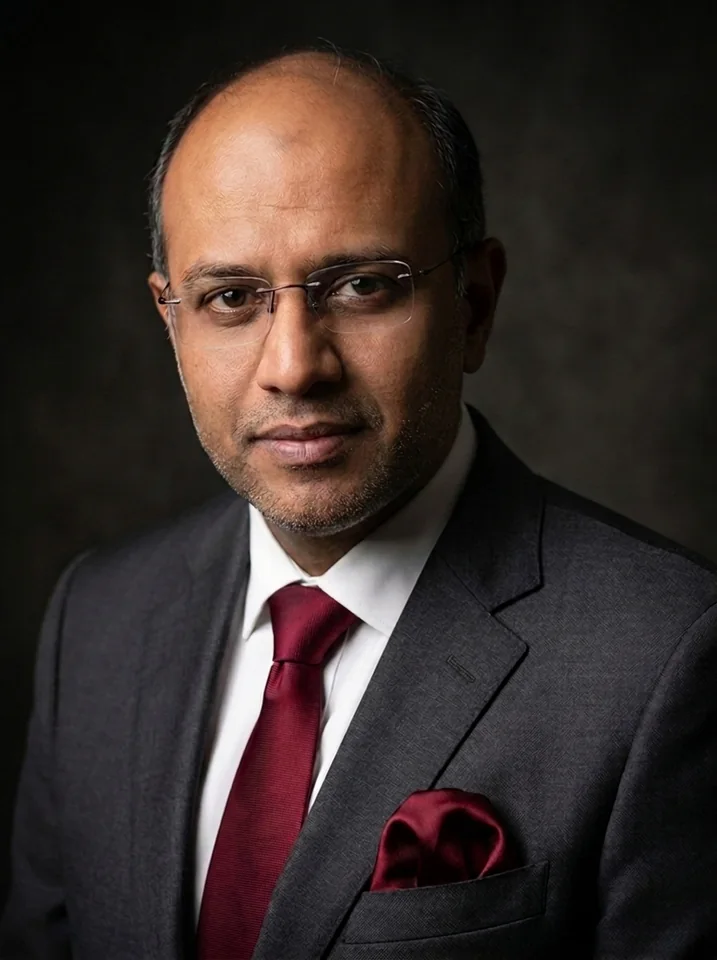
17+ years building, launching, and operating digital commerce, marketplaces, and retail turnarounds across Qatar, Oman, and the GCC. Focused on unit economics, daily execution, and cash-generating growth.